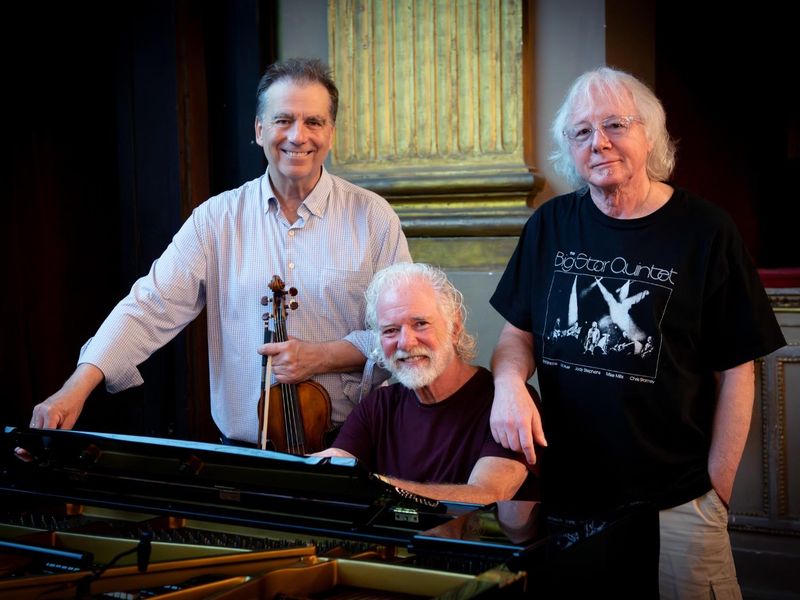
One has been described as “the secret weapon of R.E.M.”. Another has spent decades behind the keyboards of one of the greatest rock bands in history. The third is a classical musician and the directore of the Rome Chamber Music Festival.
What Mike Mills, Chuck Leavell and Robert McDuffie share is Georgia, a long friendship and a love of making music together. On June 21 they will bring a special chamber version of “A Night of Georgia Music” to Rome’s Teatro Argentina before taking the project to Carnegie Hall in New York later this summer. Listening to them talk is almost as enjoyable as hearing them play. Despite coming from different musical traditions, they clearly speak the same language.Between classical music and rock
“Our backgrounds aren’t really dissimilar,” says Mills. “Bobby and I played a lot of music and sang a lot of music together in church when we were younger. My father was in classical music, so I was no stranger to what Bobby was doing. And Bobby listened to some rock and roll with us occasionally.”
“It seems like kind of a separate thing because of the classical versus the rock and roll”, he adds. “But it’s really one of the whole points of this, to show people that there’s not much difference between the two. Well, there is, but you don’t need to make that distinction. It’s just all good music.”Rock and pop music are still often perceived as somehow “lighter” than classical music. It is exactly this divide that the three musicians want to challenge. “Chuck is one of the greatest rock and roll pianists in the world”, adds McDuffie, “so who gives a s… if he doesn’t read music? Paul McCartney doesn’t read music. Everybody has their talent.” Then he points to one of Leavell’s defining performances: “Chuck Leavell created one of the greatest iconic piano solos in the history of rock and roll, and that’s ‘Jessica’. I’m telling you it would be hard to find any famous classical pianist who could sit down and play the ‘Jessica’ solo from the Allman Brothers Band that Chuck Leavell created.”
The discussion naturally turns to the old distinction between high culture and popular culture. For decades, rock musicians looked toward orchestras and classical music as a form of artistic legitimacy. “The true difference,” Mills argues, “is that anybody can sit down and pick up a guitar and within a week you can play an infinite number of songs. You learn three chords, you can play a hundred songs, five hundred songs. You can’t sit down and learn the violin in a week. Not gonna happen. There is a level of technical proficiency that classical players have to have that is not a prerequisite for rock and roll. I know that because I’ve tried to play the violin and it’s impossible.”
But he immediately adds: “Classical music was the music of the people for a long, long time. Only in the last hundred years or so has it become reserved for the wealthy blue-haired ladies and older men, and that’s just wrong. We think that’s wrong and we want to change that. If this is a way that we can bring people from the classical world into rock and roll, and bring people from rock and roll into the classical world, then we’re successful.”
Leavell sees the project in similar terms. “We’re trying to bring different styles and different thoughts about what music is together. That’s really the point.”From classical music to classic rock
The irony, of course, is that while classical music remains the traditional canon, rock has developed a canon of its own. Entire generations of musicians now belong to what we call “classic rock”. “If you last long enough,” Mills says with a smile, “if your career is long enough and you influence enough people or make enough people happy, then yeah, you become classic. Not classical, but classic. And you do become canon. Rock and roll has only recently been around long enough to be considered that. Nobody knew what it was going to be like when it got started, or when it moved into its adolescence. Now it’s in its late adult phase, maybe, and it’s become less revolutionary and more accepting.”
The music of Georgia
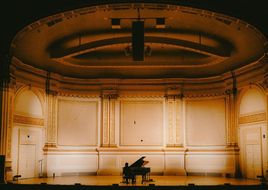
The concert they are bringing to Rome and Carnegie Hall in July is called “A Night of Georgia Music”. The repertoire ranges from Ray Charles James Brown and soul classics to Outkast and R.E.M., all filtered through strings, piano and chamber arrangements. For all three musicians, Georgia is more than a place. It is a musical identity.
“Something in the water, man,” Leavell laughs. Then he begins listing the extraordinary number of artists who emerged from the state. “Ray Charles from Georgia. So many incredible songwriters, performers, singers and musicians have come from the state. Maybe I’m a little prejudiced, but I think there’s something very, very special and unique about Georgia.”For Mills, the success of R.E.M. also helped change the way America looked at the South. “Before the internet and before the spreading of cultures across the country and the world, the South was seen as kind of a backwater. Country music, not much more. But we all knew there was so much more than that. We weren’t trying to challenge norms or anything like that. We just wanted to make the music we loved. Once that brought attention, people started seeing that there was a lot more diversity of music coming from Georgia.”
McDuffie brings the conversation back to personal experience. “Mike and I grew up in Macon. We went to church together, we were in music clubs together, we sang in church choir. It’s not like three musicians who just picked some nice pieces that happen to be from the state of Georgia. We’ve lived it, and it’s in our inner ear. It’s been there since day one.”
When asked to choose a song that represents Georgia, the conversation turns into a collective playlist.
Mills chooses “Georgia on My Mind”: It’s got a slow, relaxed, kind of swampy Southern feel to it. It’s beautiful, it’s elegiac, it encompasses a lot of what it feels like to be from Georgia.” McDuffie picks “Midnight Train to Georgia”, while Leavell opts for “Rainy Night in Georgia”. Three songs, one state.“Nightswimming” and R.E.M.
Among the songs included in the concert is “Nightswimming”, perhaps the R.E.M. song that most naturally bridges rock and chamber music. The piano motif was written by Mills and later expanded into one of the defining tracks on “Automatic for the People”, with an orchestral arrangement written with John Paul Jones of Led Zeppelin fame.
“I would like to claim that kind of foresight, absolutely,” he laughs.“ But no. I used to play it on the piano because I just enjoyed listening to it. I never expected R.E.M. to do anything with it.” Then Michael Stipe heard it: “He said, ‘Keep playing that.’ So he sat there and started coming up with lyrics. He brought it back into rehearsal and we said, ‘Oh my God, it’s an actual song.’”
Only later did the orchestral arrangement arrive. “We were using the Atlanta Symphony a good bit on that record. We had the symphony in there and we said, ‘Well, where should we use them? Let’s use them here.’” Asked whether it is the song he is most proud of, Mills refuses to claim exclusive ownership. “I don’t really necessarily feel that way, because I didn’t write it by myself. I wrote the piano part, but Michael wrote the lyrics and the melody. As with every R.E.M. song, it was all a product of the three or four of us at the time. So I feel pride of ownership in being part of R.E.M., not necessarily for saying, ‘Oh, I wrote that song,’ because I had help.”The Stones and the blues
Leavell has spent more than forty years working with the Rolling Stones, serving as both pianist and musical director. What still impresses him most is the band’s deep understanding of American roots music. “When I first started playing with these guys and we would break into a Muddy Waters song or a Howlin’ Wolf song, Mick knew every lyric to every blues song I ever heard, and Keith knew all the chords.”
“It’s just remarkable how they revere that music and what it means to them.” The moments he treasures most do not happen on stage: “They happen in rehearsal. We play all these things that most of them are not going to make it to the stage. It might be some obscure Stones song from 1967, a blues song, something from that incredible catalogue. Those are really precious moments.”
I point out that Jagger and Richards often sound more American than Americans when they play blues, country and rhythm and blues. Leavell laughs: “When Mick plays harmonica, he’s one of the best blues harmonica players alive today. He’s the real deal.”From “Aida” to Eric Clapton
The conversation ends where it began: with the idea of music moving freely between worlds. Mills recalls growing up in a house filled with opera: “My father was a dramatic tenor, so I learned a lot of tenor arias and a lot of opera growing up.” The work that left the deepest impression on him was Verdi’s “Aida”: “I was actually a street urchin in a production of it in Atlanta. My parents were in it too. So that one, both melodically and historically, triggers a lot of good memories for me.”
Leavell answers with a story of his own: “At the end of the Rolling Stones tour in 1989 and ’90, I went home and there was a voice message on my cassette machine from Eric Clapton saying, ‘Would you come play?’” He accepted, of course.
One of the first projects they worked on together was the Michael Kamen concerto performed during the “24 Nights” era. “When you say, ‘Who would you bring to this classical setting?’ Well, Eric. It was a beautiful piece, quite a lot to learn. I thought Eric did an amazing job with the concerto.”
I jokingly suggest a future performance at La Scala in Milan. “Sounds good to me, man,” Leavell replies.Listening to the three of them, the line between classical music and rock and roll seems far less rigid than it is often portrayed. At the heart of their collaboration is a simple idea: great music does not care much about categories.
Disclaimer:
Questo articolo è stato realizzato e pubblicato da Rockol.it ed i suoi contenuti sono integralmente forniti da Rockol, che ne assume ogni responsabilità editoriale. Il presente sito si limita a ospitare il contenuto in modalità non indicizzata e non è in alcun modo coinvolto nella produzione, redazione o approvazione dei materiali pubblicati.
Rock Online Italia (Rockol) è una testata giornalistica registrata presso il Tribunale di Milano: Aut. n° 33 del 22 gennaio 1996.
Immagini e diritti
Rockol:
- utilizza esclusivamente immagini e fotografie rese disponibili a fini promozionali ("for press use") da case discografiche, management artistici e uffici stampa /P.R;
- impiega le immagini per finalità di critica ed esercizio del diritto di cronaca, in modalità degradata conforme alle prescrizioni della legge sul diritto d'autore, e solo a corredo dei propri contenuti informativi;
- accetta unicamente fotografie non esclusive, destinate alla pubblicazione su testate giornalistiche, e comunque libere da vincoli di utilizzo;
- pubblica immagini fotografiche dal vivo concesse da fotografi dei quali viene indicato il copyright
Crediti fotografici per l'immagine usata nell'articolo: Viola Carnelos
Segnalazioni
Eventuali segnalazioni relative a immagini non conformi a quanto sopra descritto possono essere inviate a webmaster@rockol.it
Provvederemo a effettuare una rapida valutazione e, ove necessario, alla tempestiva rimozione del materiale.Per consultare l'articolo nella sua versione originale, visita questo link