Rock and cinema: songs make stories on the big screen even greater, while films have given us great albums in the form of soundtracks, and unforgettable sequences that further amplify the work of the great names in music.
No filmmaker understands and visualizes rock music like Wim Wenders, and few have been able to build such a close relationship with the major figures of the genre, while also rediscovering forgotten gems and artists.
Among Wenders’ great soundtracks, “Until the End of the World” stands as one of the greatest of all time: over the years it has become an absolute reference point, built around original and unreleased songs by some of the key names in international rock music: U2, Nick Cave, R.E.M.
In Italy, the film has recently returned to theaters, home video and streaming in the restored director’s cut version (distributed by CG Entertainment). In this exclusive interview with the great German director, we start from the story of that film, from how he managed to involve U2 and 16 of his favorite artists, and move on to discuss the marriage between cinema and music, songs and images. A relationship that is both central to Wenders’ creative process (“The desire for the music of the film is also helping the film to come together.”) and at the same time elusive and magical (“I want music to keep that place in my heart that I don’t exactly know or understand”).Let’s start from “Until the end of the world”, the film’s title and the U2 song. How did you cross path with the most famous band on the planet and a still-unreleased song that became the title of the film?
WW: I met U2 in Berlin when they were recording Achtung Baby at the Hansa Studio, the same recording facility where I had recorded all my previous scores, especially Wings Of Desire. I loved their music, we started to talk, I agreed to make a video for them for the Red Hot And Blue campaign, a cover of the Cole Porter song “Night and day”. We spoke more, one thing came to another and I mentioned I was editing my science fiction film Until The End Of The World.
I had nothing to lose, so I asked them if they could contribute a song to the film. Bono liked the idea, the band wasn’t opposed, and then they actually did it! The song was written for the film, even if a rough version had already existed before that Edge revisited and turned into a gem.“Until the End of the World” has one of the greatest soundtracks of all time. How did you come to choose and convince the biggest rock artists of that period?
WW: The film was an effort to imagine the near future. We shot it in 1990, and it took place at the turn of the millennium, around 2000, only ten years ahead. My main interest in the future was: where is the digital revolution going to take us?! What will happen to our audiovisual future? The internet had just arrived, but nobody was using it yet. Mobile phones weren’t there yet, and certainly not with monitors. Nobody was running around looking at a little screen in their hands… We envisioned it, together with car navigation,search engines, zoom calls, you name it.
As “Until the End of the World” is also a global road movie, I knew I needed a lot of music. But I didn’t want it to be music from 1990, I wanted it also to be from the future. So I wrote 20 letters to my favorite 20 bands, if they would consider projecting themselves into that future with us. I hoped that maybe third of them were going to say YES. But a couple of week later, answers were coming in, and the miracle was: most of them were favorable! So: 16 of my favorite musicians and bands from 1990 agreed to write a new song for us, a song with which they also tried to envision their own future in the years 2000.R.E.M. told me they revere and love your work and that their song “Fretless” was perfect for the emotional arc of the characters. How did that relationship with the band and Michael Stipe come about?
WW: I hadn’t met Michael Stipe yet. He must have liked my letter. When the tape of “Fretless” arrived, I was over the moon. The song surpassed my wildest dreams! For most bands, I had ‘assigned’ a scene to them and had sent them the written scene together with a rough cut of it. “Fretless’ had a very important place in the film… I met Michael later, and he even contributed another song, together with Vic Chesnutt, to a film 6 years later, “The End of Violence”. A great guy!Your relationship with U2 continued with “Faraway, So Close!” and “The Million Dollar Hotel”, whose subject was written by Bono. What kind of relationship is there between their music and your cinema?
WW: It is rather a friendship I had with the band, especially with Bono and the Edge. And, of course, I loved their music! I have seen each and every of their tours, all over the world. They are great storytellers, and their concerts are groundbreaking, visually. And I thought they were terrific guys who had put their heads where their hearts were. That alone is so amazing in the world they operate in, filling stadiums and attracting tremendous crowds. And I admit: I can sing along with most of their songs, I know a lot of them by heart.What about Nick Cave? You had already worked with him on “Wings of Desire”.
WW: I know Nick Cave for 40 years by now, ever since I met him in Kreuzberg, where he lived in 1986, to ask him if he’d appear in the film. And I felt I was very privileged that he did! The film featured angels, but also fallen angels… He’s one of the great contemporary voices, poets, songwriters, novelists, thinkers, artists. I’m proud I know him and that we can talk. And I read his Red Hand Files as soon as a new issue comes out. I know all 350 ones so far.When you work on a film, how early does music and songs enter the process? Do you imagine scenes already accompanied by specific sounds or songs, or does music arrive later, during editing?
WW: Mostly I dream of a certain music in the preparation, and certainly during the shoot. The music that ends up in film is often the music that I listen to when I drive to the set or go home in the evening or when I am preparing the next day’s shoot at night.
The desire for the music of the film is also helping the film to come together.This is a huge question, I realize, but what can the contribution of a song be to a film, to a scene, or more generally to telling a story through images?
WW: I know that pretty exactly, because I have experienced what music can add to a scene, and I always hope that this might happen again. What it is, in the best case: the images and the music not only add up to their sum, but they together create something new, a “Third”, which is more than their sum. I don’t think you can “produce” that or “make it happen consciously”. It is rather something that materializes on its own, when you are lucky. And when it does happen, it is a gift.You have experimented with every possible form of interaction between cinema and music: the score (I’m thinking of Ry Cooder in “Paris, Texas”), original and unreleased songs, the rediscovery of repertoire tracks. How do you choose what kind of music or songs to use?
WW: It is much more a gut decision than one that is driven by intellect. Actually, I don’t even want to try to explain it or analyze it. Listening to music takes place in a different part of our brain than “storytelling” or dramaturgy. I want music to keep this place I my heart that I don’t exactly know or understand.Generally, it seems that filmmakers prefer original songs - especially for scenes and end credits - while TV series often rely on rediscovering catalogue songs. Is this really the case? And why do original songs seem to work better in cinema?
WW: I’m not sure that this is true. Sure, for commercial reasons, and for an Oscar nomination, you need a song written for the film. But for the secret language of emotions that runs through your film, an old song can carry so much more weight! It is loaded with memories and experiences, it is filled with stuff in your life that you’re not even aware of. It can have so many more reverberations…Looking at contemporary cinema, do you feel that rock and pop music still play the same role they did in the past, or has the relationship between film and popular music changed?
WW: It has changed for the simple reason that there is so much more music around today, there is so much more of everything, and it is rotating so much faster. You don’t spend all that much time with an album any more than when you heard it on your turn table day in and day out, like the Beatles at the time, or the Stones. Most young people don’t even know about the idea of “an album” anymore, that songs were meant to be heard in a certain order, were telling a story through their order. Most songs run on playlists, without their very own context. Who is still reading lyrics today? And where do you find them, except on the internet? Not many people go through that effort any more. Listening becomes vague, understanding becomes vague, emotions remain vague. All that contributes to less of a “cohesion” between music and movies.With “Buena Vista Social Club” you told the story of music itself, its memory, and its transmission. How did that project change your way of thinking about the relationship between cinema, music, and cultural preservation?
WW: The work of cultural preservation was done magnificently by Ry Cooder, Nick Gold and the engineer, Jerry Boys. They had the whole tradition of “Son” in their heads, they knew all the heroes, the song writers, the forgotten songs. I only tried as good as I could to follow the events, to witness the amazing depth of the musicians’ relation to their sound and their songs. All of them carried a lifetime of dedication to that sound in their minds and in their bodies. The body language of the musicians was part of their expression, just as well as their voices and their instruments.“Cinematic” is an adjective often applied to pop-rock music, when songs tell stories with epic sounds and words. Do you think it’s a good way to define a certain kind of music? More generally, what connects rock music and cinema?
WW: Maybe you ask me something easier in between? (laughs) Yes, songs tell stories! Bruce Springsteen, Lou Reed, Patti Smith, Greg Brown and certainly Bob Dylan are amazing “story-evokers”. In a song, sometimes a few words can tell as much as an entire scene with minutes of dialogue. Songs have “co-writers” in any instrument, in any note, in any background voice, even in the echo of words. Songs pull strings in you that only poets can get to vibrate.You have also directed music videos: for U2, Talking Heads, Eels. How do you relate to this format?
WW: As a confessing workaholic, I loved music videos. It was the whole process of filmmaking, only in a miniature. You’d look for locations, you’d cast, you’d work on the storyboard or break down every part of the song… you’d put together a full crew with all the same functions than on a movie set, even if they’d only shoot for one or two days. Then you edit (my favorite part!), you color-correct and you show the result to various people for criticism and input. Music videos were a huge joy, for some time in their history.You have included Lucio Dalla, Fabrizio De André, and also Rosa Balistreri in your films. What is your relationship with Italian music?
WW: I love Italian music! Fabrizio De André is one of my biggest heroes in 20th century music! He tragically died way too young. I had a project with Hal Willner to put together a concert of songs by Fabrizio in Central Park, sung by people from all over the world. It didn’t happen.
Disclaimer:
Questo articolo è stato realizzato e pubblicato da Rockol.it ed i suoi contenuti sono integralmente forniti da Rockol, che ne assume ogni responsabilità editoriale. Il presente sito si limita a ospitare il contenuto in modalità non indicizzata e non è in alcun modo coinvolto nella produzione, redazione o approvazione dei materiali pubblicati.
Rock Online Italia (Rockol) è una testata giornalistica registrata presso il Tribunale di Milano: Aut. n° 33 del 22 gennaio 1996.
Immagini e diritti
Rockol:
- utilizza esclusivamente immagini e fotografie rese disponibili a fini promozionali ("for press use") da case discografiche, management artistici e uffici stampa /P.R;
- impiega le immagini per finalità di critica ed esercizio del diritto di cronaca, in modalità degradata conforme alle prescrizioni della legge sul diritto d'autore, e solo a corredo dei propri contenuti informativi;
- accetta unicamente fotografie non esclusive, destinate alla pubblicazione su testate giornalistiche, e comunque libere da vincoli di utilizzo;
- pubblica immagini fotografiche dal vivo concesse da fotografi dei quali viene indicato il copyright
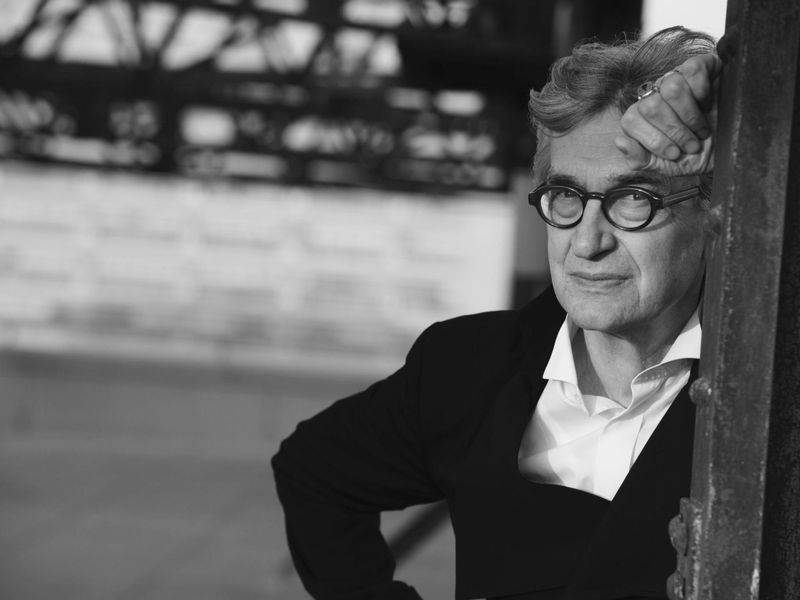
Crediti fotografici per l'immagine usata nell'articolo: Peter Lindbergh
Segnalazioni
Eventuali segnalazioni relative a immagini non conformi a quanto sopra descritto possono essere inviate a webmaster@rockol.it
Provvederemo a effettuare una rapida valutazione e, ove necessario, alla tempestiva rimozione del materiale.Per consultare l'articolo nella sua versione originale, visita questo link